
Ultra-thin borosilicate glasses, such as the 50 µm thick Schott D263, are crucial substrates for next-generation flexible electronics, micro-optics, and medical sensors. However, standard separation processes often induce detrimental micro-cracks and residual stresses, compromising the mechanical integrity of the final component. Consequently, achieving defect-free edges currently necessitates complex and time-consuming two-step procedures, such as Laser-Induced Deep Etching, to restore the substrate's mechanical strength.
This study investigates the processing quality of ultra-thin glass using an ultrashort pulse laser system (λ = 1030 nm) equipped with a 20 mm biconvex focusing optic. To identify the optimal ablation regime and minimize thermal damage, a multi-pass cutting strategy utilizing 36 passes is systematically evaluated across three distinct pulse durations: 1 ps, 395 fs, and a sub-100 fs regime (down to 58 fs in this study) achieved through external pulse compression of the Pharos laser with the MIKS1_S compressor (n2-Photonics). Surface topography and edge quality are rigorously evaluated using a 3D laser scanning microscope to capture the exact extent of defect formation.
Experimental results demonstrate a significant dependency of the edge quality on the selected pulse duration. The findings clearly indicate that shorter pulse durations directly correlate with a substantial reduction in chipping along the cut edge. Operating in the shortest pulse duration regime of 58 fs shifts the dominant absorption mechanism towards deterministic multi-photon ionization. This effectively suppresses stochastic avalanche processes and minimizes thermo-mechanical shockwaves, providing essential insights for the defect-free processing of ultra-thin glasses and ensuring high mechanical resilience for industrial scale-up.
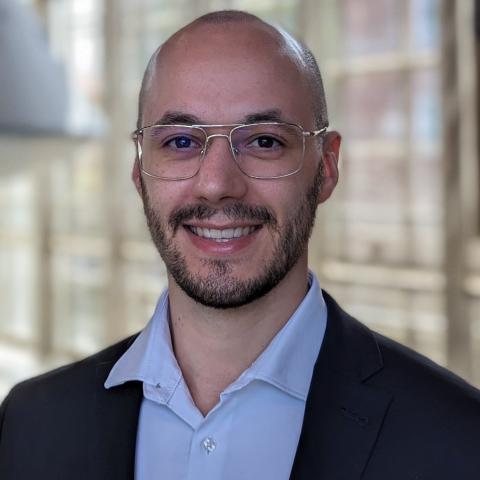
Presenter
Torben Boehm
Laser Zentrum Hannover e.V.

About Torben
Torben Böhm studied Mechanical Engineering and Optical Technologies at Leibniz University Hannover, Germany. Now, he works as a Research Fellow at the Laser Zentrum Hannover in the Sustainable Production Department, where he focuses on the development of laser-based processes for glass and ceramics. His expertise includes laser welding, structuring, marking, and additive manufacturing of glass materials. Through his research, Torben aims to advance sustainable production technologies and innovative applications in material processing.
Keywords
- Borosilicate Glass
- Direct Laser Ablation
- Pulse Compression
- Ultra-Thin Glass
- Ultrashort Pulse Laser