
High‑speed laser welding is an essential manufacturing process for the large‑scale fabrication of EV battery cooling plates, where joint quality and surface integrity directly affect functional performance. At welding speeds above 400 mm/s, weld seam instabilities, such as excessive seam elevation, undercut formation and humping, can compromise joint quality. Because these instabilities are strongly governed by the spatial distribution of laser energy, selecting an appropriate beam shape is a critical task.
This study investigates the effect of pre-defined laser beam shapes on melt pool stability and weld morphology during high-speed laser welding of 1 mm-thick AA5754 in overlap configuration. A conventional multi-mode beam and three Coherent Beam Combining (CBC)-generated beam profiles are experimentally evaluated at welding speeds of 100, 400 and 600 mm/s. Melt pool dynamics are characterised through high-speed imaging and correlated with metallographic analysis. In addition, a melt pool stability index is proposed by combining in-situ observations with predictions from a 2D thermal model. The main finding is that appropriately positioned low-intensity side lobes can promote lateral redistribution of the molten metal and reduce the rearward accumulation responsible for melt flow instability. The paper discusses how the proposed index offers a practical tool for guiding beam shape selection.
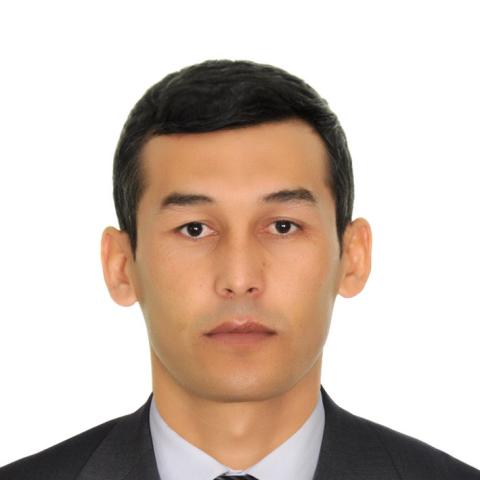
Presenter
Husniddin Mamarayimov
Politecnico di Torino

About Husniddin
PhD Candidate and Research Assistant at the Department of Management and Production Engineering (DIGEP), Politecnico di Torino, since 2023. Research focuses on data-integrated numerical simulations of advanced vehicle manufacturing processes, particularly the prediction of thermal distortions in automotive components during the painting process and thermo-mechanical distortions in laser-welded assemblies through multi-scale micro-macro modeling. Additional work addresses the stamping behaviour of polypropylene-based E-glass fiber reinforced composite materials for lightweight structures. Research integrates computational mechanics and data-driven approaches to improve predictive accuracy and manufacturing robustness using multiphysics finite-element platforms including SYSWELD, COMSOL Multiphysics, and PAM-FORM.
Keywords
- Aa5754
- Battery Cooling Plates
- Beam Shaping
- High-Speed Welding
- Melt Pool Stability Index