
Sub-50 fs, post-compressed Yb-laser systems are transitioning from laboratory to industrially relevant maturity. Such systems enable processing regimes with substantially increased peak power over conventional >200 fs sources. In this work, we give an overview of the processing results achieved with such laser system from different early adopters of n2-Photonics technology.
Fig. 1(a) shows the processing results for UVFS and Sapphire, comparing 50 fs and 270 fs pulse durations. [1] Fig. 1(b) shows ablated and etched grooves in fused silica for comparison between 50 fs and 500 fs pulse duration. Finally, Fig. 1(c) compares the cracking behaviour of c-monocrystalline sapphire at moderate laser fluence (5 J/cm²) at 50 fs and 500 fs. This temporal shortening has been shown to significantly improve surface and edge quality while enabling higher average powers. Across several transparent substrates, including fused silica and sapphire, using sub-100 fs pulses led to cleaner edges, reduced chipping, and strongly suppressed cracking compared to pulses in the few-hundred-femtosecond regime. Notably, the resulting machining quality at 50 fs, 1030 nm appears comparable to what is typically achieved with longer-pulse processing at shorter wavelengths such as 515 nm and 343 nm. Beyond surface ablation, the same pulse-duration reduction improves in-volume modifications by reducing stress and collateral damage, thereby enabling smoother refractive index modifications and a larger processing window. We demonstrated that reducing the pulse duration from 500 fs to 50 fs at 1030 nm prevents chipping and cracking across a wide range of transparent materials.
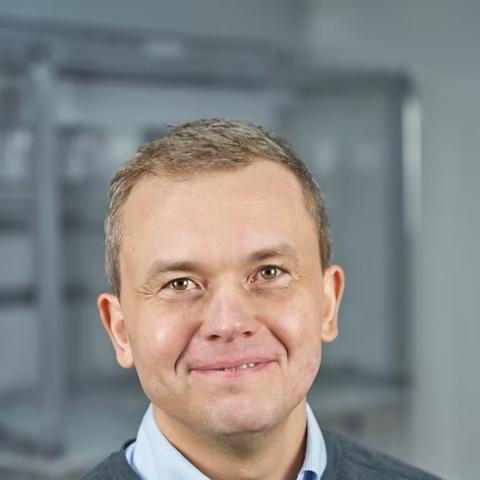
Presenter
Oleg Pronin
n2-Photonics GmbH | Helmut Schmidt University

About Oleg
Oleg Pronin was born in Ertil, Russia, in 1985. He received a Ph.D. degree in physics from the Ludwig Maximilian University of Munich, Germany, in 2012 under the supervision of Prof. Ferenc Krausz (Nobel Prize in Physics 2023). He is currently a full professor at Helmut Schmidt University in Hamburg, Germany. He has co-authored over 30 articles and holds several patents. He is a co-founder of n2-Photonics start-up company. His research interests include soliton mode-locking and instabilities, the development of high-power femtosecond lasers, frequency combs, nonlinear spectral broadening, and few-cycle pulse generation, and recently, the femtosecond micromachining."
Keywords
- Cold Ablation
- Femtosecond
- Micromachining
- Transparent
- Ultrafast