
Nature inspires many innovations. For example, the lotus leaf is known for its superhydrophobic effect, shark skin reduces water turbulence thanks to its texture, and the dragonfly wing offers exceptional transparency. These phenomena share a specific micro-texture that gives each surface its unique properties. Thanks to biomimetic, it is possible to reproduce these characteristics on other surfaces.
Biomimetic allows the creation of micrometric and nanometric textures using ultrashort lasers, thus improving material properties. This technique offers various functionalities such as friction control, superhydrophobic effect, anti-frost, surface blackening, shark skin effect, anti-reflective surface, etc. However, treating each surface with a laser can lead to significant additional costs.
To reduce these costs, a new approach proposes creating a negative pattern on a plastic injection mold, allowing these textures to be imprinted onto injected parts at a much higher production rate. This study explores several geometries and dimensions of textures, ranging from a few hundred nanometers to a few tens of microns, and verifies their replicability on a large scale.
Two polymers, high-density polyethylene (HDPE) and polypropylene (PP), are studied. By varying the injection pressure and mold temperature, we aim to transfer textures ranging from a few tens of micrometers to sub-micrometric textures. Finally, SEM imaging and wettability measurement of the injected surfaces is carried out to validate the transfer of textures and their hydrophobic and superhydrophobic properties.
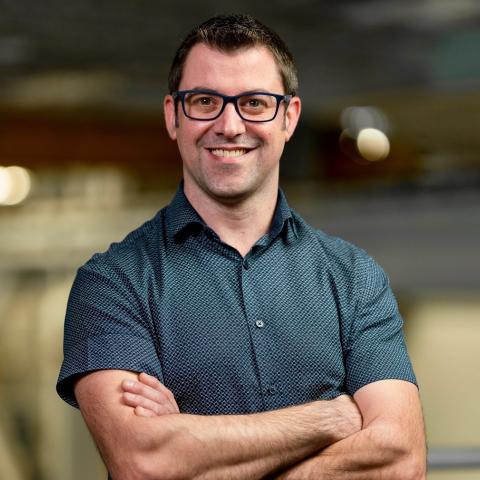
Presenter
Christophe Arnaud
Solutions Novika

About Christophe
Christophe ARNAUD is a laser processing specialist and project manager at Solutions NOVIKA in Quebec, Canada. He studied Laser, Optics, and Photonics in France and has over 20 years of experience in laser processing. He has worked with CW and long-pulse lasers to develop laser welding techniques for aluminum alloys, authored technical papers on laser polishing, structuring, and additive manufacturing, and worked with short-pulse and ultrashort-pulse lasers for composite machining, texturing, micromachining, and stealth dicing of photonic chips. He has collaborated on numerous projects and facilitated technological transfer into various industries.
Keywords
- Biomimetic
- Laser Texturing
- Nanostructures
- Plastic
- Ultrashort Pulsed Laser