
In the laser-assisted fiber cleaving process, an ultrashort, high-energy laser is used to introduce a flaw on the optical fiber surface, and then the fiber is cleaved under a tension or bending load. The quality of the cleaved end depends on the crack propagation from the artificial flaw. To understand the cleaving process and the effects of flaw parameters on cleaving quality, crack propagation is modeled by considering a pre-existing surface flaw using a graph-based finite element method (GraFEA). GraFEA is based on the nonlocal multiple cracking simulation framework for brittle and quasi-brittle materials. First, a three-point bending test is conducted to calibrate material parameters in GraFEA for commercial fused silica glass. Subsequently, the model is validated by four-point bending and ring-on-ring tests. After validation, the fiber cleaving process is investigated by parametric simulations in which different loading types (bending or tension) are considered. Finally, a beneficial process window is obtained and recommended for improved cleaving quality.
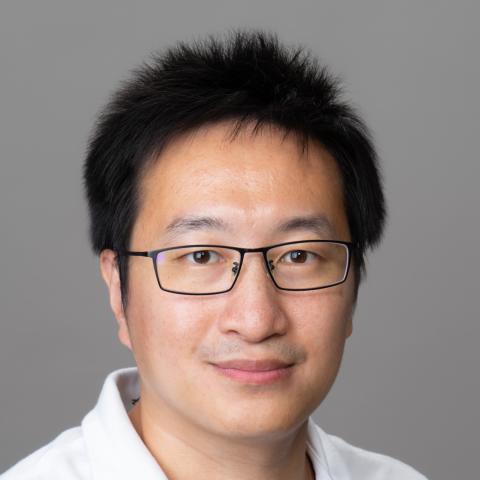
Presenter
Lei Mu
Corning Research & Development Corporation

About Lei
Lei Mu is a senior applied mechanics modeling scientist from Corning Incorporated. He holds a mechanical engineering doctoral degree. He has more than 10 years of experience in finite element modeling for structural and mechanical integrity analysis and he specializes in modeling failure behavior of engineering materials under complex loading conditions.
Presenter
Lei Yuan
Corning Research & Development Corporation
About Lei
Lei Yuan received his Ph.D. degrees in both Electrical and Computer Engineering from Clemson University in 2017 and Mechanical Engineering from Beijing Institute of Technology in 2014. He received his B.S. degree in Mechanical Engineering and Automation from Beihang University in 2008. His research interest mainly focuses on ultrafast laser micromachining and fiber optic sensors. Dr. Lei Yuan joint Corning Research and Development Corporation in 2017. He is a Sr. Research Scientist in Optical Physics & Transmission - Laser Processing Research group. He also serves as both technical lead and project manager in his role.
Keywords
- Crack Propagation
- Fiber Cleave
- Graph-Based Finite Element Analysis
- Optical Fiber
- Ultrafast Laser