
To design future laser manufacturing processes for welding of copper materials, more and more high-end analysis methods are required. A fundamental process understanding by analyzing cause-and-effect relations of process dynamics using inline in situ diagnostics allows for an improved description of laser material interaction. Strategies for a reliable and robust welding process are derived from the findings. In this study, a four-step advanced methodical approach is presented and discussed. In the first step, a fundamental process description of the geometry of the vapor capillary and the formation of weld defects is developed. Therefore, welds on electrolytic tough pitch copper (Cu-ETP) and CuSn6 are carried out to analyze the temporal and spatial vapor capillary dynamics depending on laser power, welding speed, and focal diameter. This fundamental process understanding is transferred to the welding of copper pins in the form of I-pins. For this purpose, impurities and imperfections were applied to the pin surface to investigate the effects on the process result. As a third step, strategies by means of laser intensity distributions were adapted to compensate for imperfections in the welding process. Finally, a sensor vision system is adapted for ideal welding results. Investigations are based on in situ synchrotron analysis at Petra III, DESY in Hamburg. For the experiments, a TRUMPF TruDisk laser (100/400 μm fiber diameter), a TRUMPF TruFiber 6000P (50/100 μm fiber diameter), and a single-mode fiber laser (14 μm fiber diameter) were used. The focal diameter was adjusted with the optical system depending on the investigation.
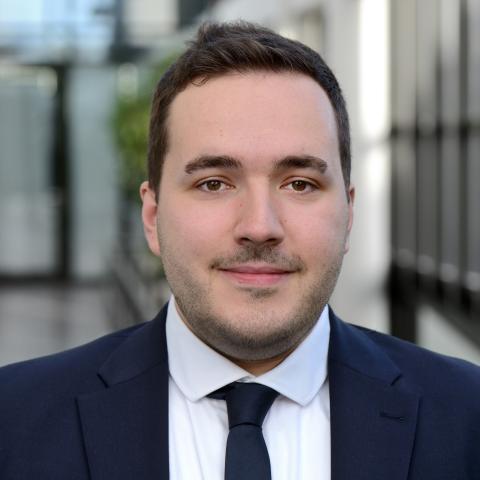
Presenter
Christoph Spurk
RWTH Aachen University, Chair for Laser Technology LLT

About Christoph
Christoph Spurk received his M.Sc. degree in Mechanical Engineering (Production Engineering) with a major in machine design and automation in 2021. Alongside his studies, he worked as a student assistant at the Fraunhofer Institute for Laser Technology ILT in the department Micro Joining of Metals. Since graduation, he is working as a research assistant at RWTH Aachen University (Chair for Laser Technology LLT) in the department Fundamentals of Melt-Based Processes pursuing his Ph.D and processing subproject A01 of the Collaborative Research Center SFB1120. His research interests include laser welding, digitalization, process management, automation, energy storage systems and synchrotron experiments.
Keywords
- Copper
- Copper Pins
- E-Drive
- Laser Welding
- Synchrotron