
The surface tension of metals governs essential mechanisms in thermal processing techniques, including laser materials processing. For computational fluid dynamics accurate surface tension data are essential. Because of certain reasons like limitations to lower temperatures for existing surface tension measurement methods, and too few measurements, far too few data are available. A new method variant is proposed, to extend surface tension measurement to higher temperatures, up to the boiling temperature and even beyond. A laser beam generates a falling metal drop. From high-speed imaging, the oscillation frequencies of the free-falling drops can be measured and the surface tension can be derived. Two different methods are presented to generate the drop, single pulse laser melting of a suspended metal piece, then falling, and drop detachment from a laser molten metal wire tip. The approach, which will be developed stepwise, has also the aim to generate and measure a desired drop temperature to provide surface tension data as a function of temperature for different metal alloys. First results with iron sheets or with stainless steel wire show that drops with suitable oscillations can be generated but that certain challenges have to be solved. Sufficient recording duration is needed to take into consideration a higher frequency resolution and in turn accurate calculation by considering drop rotation and the third oscillation dimension. Laboratories equipped with a high-power laser, a high-speed camera and a temperature measurement instrument, e.g. a pyrometer, will be capable to measure desired surface tension values in an efficient manner.
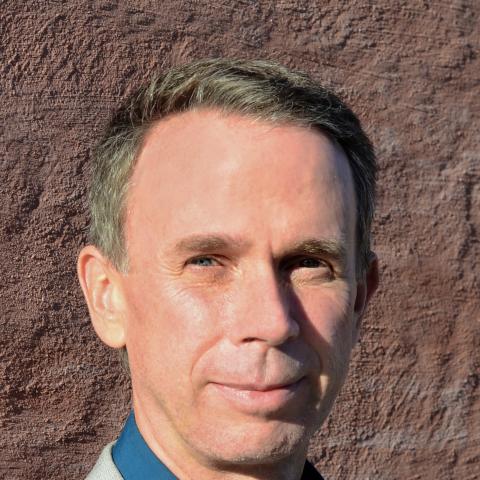
Presenter
Alexander F H Kaplan
Luleå University of Technology

About Alexander
Alexander Kaplan was born in Vienna, Austria in 1967. He was employed as researcher at Vienna University of Technology from 1989 to 2000. In 1994 he received his PhD-degree on the modelling of laser welding. After a post-doc year at Osaka University, Japan, from 2002 on he has been appointed as professor and chair of Manufacturing Systems Engineering at Luleå University of Technology, Sweden. Alexander Kaplan has particular experience in mathematical modelling and high speed imaging of laser materials processing, particularly for laser welding and laser additive manufacturing.
Keywords
- Drop Oscillation
- High-Speed Imaging
- Laser Droplet Generation
- Metals
- Surface Tension