
Powder bed fusion of metals using laser beam (PBF?LB/M) is a commonly used additive manufacturing process for the production of high-performance metal parts. AlSi10Mg is a widely used material in PBF-LB/M due to its excellent mechanical and thermal properties. However, the part quality of AlSi10Mg parts produced using PBF-LB/M can vary significantly depending on the process parameters. This study investigates the use of machine learning (ML) algorithms for the prediction of the resulting part density of AlSi10Mg parts produced using PBF-LB/M. An empirical dataset of PBF-LB/M process parameters and resulting part densities is used to train a ML models. Furthermore, a methodology is developed to allow density predictions based on simulated meltpool dimensions for different process parameters. This approach uses finite element simulations to calculate the meltpool dimensions, which are then used as input parameters for the ML models. The accuracy of this methodology is evaluated by comparing the predicted densities with experimental measurements. The results show that ML models can accurately predict the part density of AlSi10Mg parts produced using PBF-LB/M. Moreover, the methodology based on simulated meltpool dimensions can provide accurate predictions while significantly reducing the experimental effort needed in process development in PBF-LB/M. This study provides insights into the development of data-driven approaches for the optimization of PBF-LB/M process parameters and the prediction of part properties.
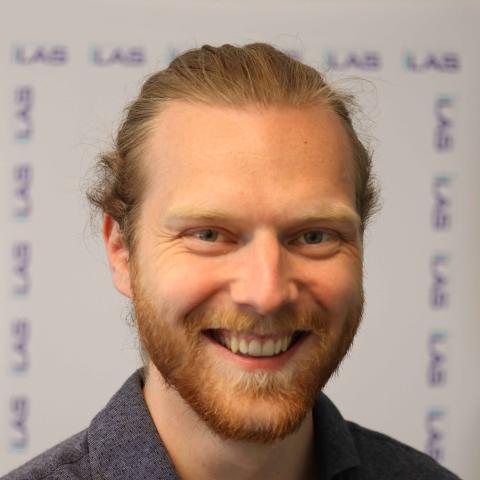
Presenter
Maxim Kühne
Hamburg University of Technology (TUHH), Institute of Laser and System Technologies (iLAS)

About Maxim
Maxim Kuehne is a researcher specializing in materials development for additive manufacturing. He graduated with a bachelor's degree in mechanical engineering from TU Hamburg in 2019 and pursued a master's degree in product development at the same university in 2022. Currently, Maxim Kuehne is working as a scientific employee at the institute for laser and system technology (iLAS) at TU Hamburg, where his research focuses on the application of artificial intelligence and machine learning in materials development for additive manufacturing.
Keywords
- Additive Manufacturing
- Artificial Intelligence
- Laser Powder Bed Fusion
- Machine Learning