
Indirect-drive Inertial Confinement Fusion (ICF) experiments on the National Ignition Facility (NIF) have, for the first time, demonstrated fusion ignition in the laboratory. This milestone occurred for the first time in an experiment conducted on December 5 th , 2022, releasing 3.15 MJ of energy from the deuterium-tritium (DT) fusion reaction using 2.05 MJ of laser energy for a target gain of 1.5. This talk will describe this and more recent ignition experiments, chronicle some of the important scientific and technological developments that contributed to the increase in experimental fusion energy output that occurred between 2011 and today, and the prospects of harnessing fusion in the laboratory as an energy source.
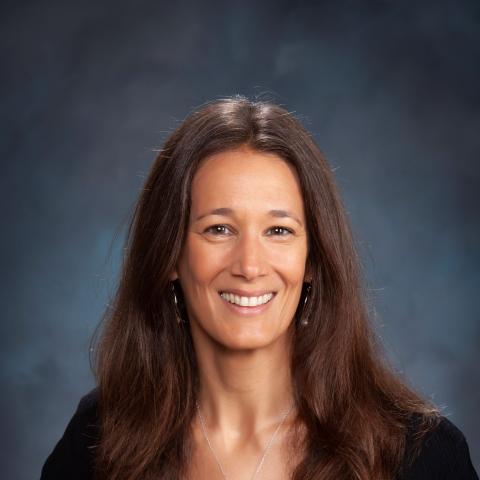
Presenter
Félicie Albert
Lawrence Livermore National Laboratory
About Félicie
Félicie Albert is a scientist at the Lawrence Livermore National Laboratory in the National Ignition Facility and Photon Science directorate, and the deputy director for LLNL’s center for High Energy Density Science Center and Jupiter Laser Facility.
Félicie earned her PhD in physics in 2007 from the Ecole Polytechnique in France, her MS in Optics from the University of Central Florida in 2004, and her BS in engineering from the Ecole Nationale Supérieure de Physique de Marseille, France, in 2003. Her areas of expertise include the generation and applications of novel sources of electrons, x-rays and gamma-rays through laser-plasma interaction, laser-wakefield acceleration, and Compton scattering. She has conducted many experiments using high-intensity lasers at various facilities around the world.
Félicie received the Presidential Early Career Award for Scientists and Engineers (PECASE) in 2019, was awarded a 2016 DOE Early Career Research Program Award to develop new x-ray sources for high energy density science experiments and has been leading several Laboratory Directed Research and Development (LDRD) projects at LLNL. She is the recipient of the 2017 American Physical Society (APS) Katherine E. Weimer Award for outstanding contributions to plasma science research and of the 2017 Edouard Fabre Prize for contributions to the physics of laser-produced plasmas. She was elected a Fellow of the APS (Division of Plasma Physics) in 2019, a National Academy of Sciences Kavli Fellow in 2020 and a Fellow of Optica (formerly OSA) in 2023. She served as chair of LaserNetUS, a network for 10 high power lasers in North America between 2020-2022, as well as on the National Academies committee for the assessment of High Energy Density Science in 2021-2022.
Keywords
- Fusion
- Ignition