
Exciting possibilities exist between water washable materials and UV lasers, leading to unique final products. Ideal material properties include thermal resistance >300°C and complete rinsing with water to yield a pristine clean surface. Daetecâs rinseable coatings and adhesives contain heat resistant phenyl groups similar to that as polyimide (PI) and benzocyclobutene (BCB). Yet they are cast from water and are easily rinsed, making them some of the most unique materials on the market.1 The DaeCoatTM products are available in a photocurable format which is fixed in seconds onto surfaces upon flood exposure to ultraviolet light or used as bonding agents between substrates. These products contain an ultraviolet absorbing agent (UVA) which is wavelength matched to the UV laser. Beam scattering is absorbed and reduced by the UVA, a phenomena which improves ablative resolution while maintaining debris washing. DaeCoatTM products are used for laser patterning followed by plasma dicing, an emerging practice of passive singulation (non-mechanical sawing) of thin semiconductor wafers. Customers enjoy increased throughput while eliminating chipping and cracking of wafers. As device die size shrinks to below 0.5mm (millimeter) on a side, improved resolution is achieved by driving down energy density at the laser while increasing UVA content in the film. DaeCoatTM products are highly resistant to plasma etch chemistry. They exhibit etch selectivity values of 1,000:1 or greater, a number that describes preferential silicon etch as compared to coating erosion as: Si:coating. High etch selectivity allows plasma dicing to reach completion with thin coatings (<5um). In a bonding application, flexible polyimide and graphene are temporarily affixed to glass. Once affixed, the bonded substrates are placed into a cassette, staged for laser cutting, and washed with water. A photocurable adhesive that disappears with water replaces a complex and costly mechanical holding fixture. In another bonding process, semiconductor substrates are ground <20um. Substrate separation occurs by laser lift-off (LLO), a process whereby the laser is tuned at the interface, achieving bond breakage while minimizing thermal effects.2 DaeCoatTM products are applied by spin, spray, and other practices. Complex features that need conformal coverage are achieved by ultrasonic spraying.3 Upon process completion, simple washing by DIW leaves the surface free of residue and ready for next steps. Further details of these processes with evidence will be shared.
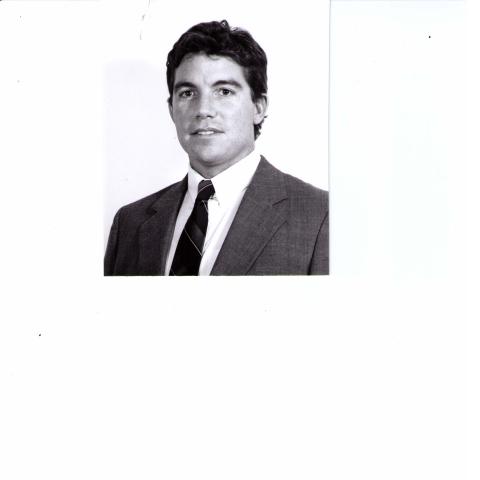
Presenter
John C. Moore
Daetec LLC
About John
Daetec is John Mooreâs 3rd company. His team creates coating and cleaning solutions for manufacturing. Moore is an expert in thin substrate handling, creating temporary bonding solutions as WaferBondTM as sold by Brewer Science and nano-adhesives used to make the first curved displays by Samsung. He created GenSolveTM, a dissolving agent for thick photoresist used in every factory that creates copper pads and pillars. John creates washable coatings and adhesives for multiple applications in laser processing. He holds more than 40 patents and 100 publications. Moore completed his graduate work in chemistry at UCSB.
Keywords
- Absorption
- Coatings
- Thermal Resistant
- Uv Laser
- Washable